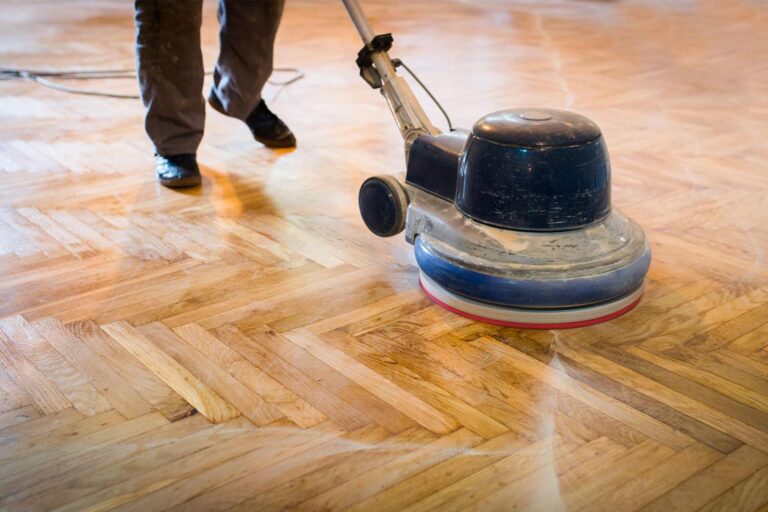

Alpharetta’s established neighborhoods — Windward, Wyndham, Country Club of the South, Webb Bridge, and the communities built through the 1990s and early 2000s along Old Alabama Road and Haynes Bridge Road — contain some of North Fulton County’s finest original hardwood flooring. After 20 to 30 years of family life, these floors show it: scratches from furniture moves and pet claws, dullness where the finish has worn through, color inconsistencies from sun exposure near windows, and the general fatigue that comes from decades of daily use without professional attention.
The good news is that most of this damage is entirely reversible. Professional hardwood floor refinishing restores Alpharetta floors to like-new condition — without the cost, disruption, and material waste of full replacement. This guide gives Alpharetta homeowners the complete picture: how to know whether your floor is a refinishing candidate, what the full process involves, how much it realistically costs in 2026, and the specific considerations that apply in North Fulton County’s market and climate.
Is Your Alpharetta Hardwood Floor a Candidate for Refinishing?
Not every damaged hardwood floor can be refinished — and not every floor that looks bad actually needs full refinishing. The first step for any Alpharetta homeowner is understanding which category their floor falls into.
Signs Your Floor Is Ready for Refinishing
These conditions indicate a floor that will respond well to professional refinishing and emerge looking new:
- Surface scratches that haven’t penetrated the wood itself: Scratches that stop at the finish layer — visible as dull or white marks — sand out completely in a full refinish. Even deep scratches that have reached the wood surface are addressed during the sanding process.
- Dull or worn finish in traffic areas: The finish wears first in the paths that see the most foot traffic — entry areas, hallways, and kitchen-to-living-room transitions. When these areas look noticeably different from the rest of the floor, refinishing restores uniform appearance across the entire surface.
- Minor color inconsistency from sun exposure: Alpharetta’s homes — particularly those in Windward with significant south-facing window exposure — often develop color variation between sun-exposed and shaded areas of the same floor. Refinishing with a new stain can address this inconsistency and produce a uniform result.
- Light surface cupping that has resolved: If boards experienced minor cupping during a past humidity event but have since returned to flat — or close to flat — after conditions normalized, refinishing can restore the surface appearance even where some board movement occurred.
Signs Your Floor May Not Be Refinishable
These conditions indicate a floor that needs professional assessment before any refinishing decision:
- Boards thinned from prior refinishing: Solid hardwood can typically be refinished 5–10 times over its lifetime. If a floor has been sanded repeatedly, the boards may be too thin to support another full sand without risking damage to the tongue-and-groove edges. A professional can measure remaining thickness with a gauge before committing to a full refinish.
- Active moisture damage with ongoing cupping or buckling: Boards that are still cupped because the moisture source has not been resolved will not flatten during sanding. The source of moisture must be identified and addressed before refinishing.
- Deep pet staining that has penetrated into the wood: Surface pet stains sand out easily. Staining that has penetrated deeply into the wood fibers — visible as dark discoloration even after light sanding — may require board replacement in affected areas before refinishing the surrounding floor.
- Structural damage or rot: Boards that are soft, spongy, or structurally compromised cannot be restored through refinishing. These areas require replacement before a refinish of the surrounding floor is appropriate.
Screen and Recoat vs. Full Sand and Refinish — Choosing the Right Service
Hardwood floor refinishing is not a single service — it encompasses two distinct processes with different applications, costs, and results. Many Alpharetta homeowners are sold a full refinish when a screen and recoat would have been adequate, or are sold a screen and recoat when their floor actually needs full sanding. Understanding the difference protects your investment.
Screen and Recoat — Surface Maintenance
A screen and recoat is a maintenance-level service that scuffs the existing finish with a screen buffer to create adhesion for a new topcoat — without sanding down to bare wood. It adds a fresh protective layer to a floor that is structurally sound and cosmetically acceptable but has lost its gloss or developed minor surface wear.
Screen and recoat is appropriate when: the existing finish is intact and bonded (not peeling or flaking), there are no deep scratches or staining to address, the homeowner wants to extend the life of a floor that still looks decent, and no color change is desired. It is significantly faster than full refinishing — typically completed in one day — and costs considerably less: $1.25–$2.50 per square foot in Alpharetta in 2026.
The limitation: a screen and recoat cannot address scratches that have penetrated the finish, correct color inconsistency, or restore a floor that looks genuinely worn. If those conditions exist, a full sand and refinish is required.
Full Sand and Refinish — Complete Restoration
A full sand and refinish removes the existing finish entirely by sanding down to bare wood, then applies new stain (if a color change is desired) and multiple coats of fresh finish. This process addresses scratches, staining, color inconsistency, and minor surface irregularities — producing a result that is genuinely indistinguishable from a new floor installation when executed correctly.
Full refinishing takes two to five days depending on square footage, the number of finish coats required, and whether staining is involved. The result lasts 8–15 years before the next refinish is needed, depending on traffic levels and maintenance. For Alpharetta’s established homes where the goal is maintaining the floor’s quality and resale value through the next decade of ownership, a full refinish is the correct investment.
Trending Floors provides complete hardwood floor refinishing in Atlanta and across North Fulton County — including both screen and recoat maintenance services and full sand-and-refinish restoration for Alpharetta’s established homes.
The Full Hardwood Refinishing Process — Step by Step
Understanding what a professional refinish actually involves helps Alpharetta homeowners evaluate any contractor they’re considering — and identify the shortcuts that separate professional work from budget operations.
Step 1 — Pre-Refinishing Assessment
A professional refinishing contractor assesses the floor before any work begins: measuring board thickness to confirm refinishing is viable, identifying any boards that need replacement, checking for active moisture issues, and documenting existing damage. In Alpharetta’s humidity-sensitive market, moisture conditions at the time of refinishing matter — oil-based finishes in particular are sensitive to ambient humidity during application and curing.
Step 2 — Furniture Removal and Room Preparation
All furniture is removed from the work area. Doors are sealed to contain dust (even with dustless systems, some dust management is required), and HVAC vents in the work area are typically covered to prevent finish particles from entering the system.
Step 3 — Sanding — Three-Pass Process
Professional sanding requires a minimum of three passes with progressively finer grit: a coarse cut to remove the existing finish and level the surface, a medium pass to remove the coarse scratches, and a fine pass to prepare the wood for stain or finish. The perimeter and corners — which the drum sander cannot reach — are addressed separately with an edge sander. A contractor who completes sanding in one or two passes is producing a surface that will show sanding marks through the new finish.
According to the National Wood Flooring Association, proper sanding preparation is the single most important determinant of refinishing quality — a perfectly applied finish over inadequate sanding produces poor results, while a properly prepared surface makes finish application straightforward.
Step 4 — Staining (Optional)
If a color change is desired — one of the most common requests in Alpharetta’s renovation market, where homeowners frequently want to update older honey oak or orange-toned floors to the cooler, more contemporary tones now popular — stain is applied after the final sanding pass and allowed to penetrate and dry before finish application. Stain adds $1–$2 per square foot to the total project cost and one additional day to the timeline.
The 2026 stain trend in Alpharetta mirrors Metro Atlanta broadly: warm medium-brown tones, natural white oak looks, and greige (gray-beige) blends are replacing the dark espresso and ebony stains that dominated the previous decade. Warm, natural tones photograph better for MLS listings and appeal to a broader buyer demographic in North Fulton County’s competitive resale market.
Step 5 — Finish Application
Professional finish is applied in multiple coats — typically three for a full refinish — with light screening between each coat to ensure proper adhesion and a smooth final surface. The finish type chosen significantly affects the result’s appearance, durability, and drying timeline.
Step 6 — Curing and Return
Light foot traffic is typically possible 24 hours after the final coat. Furniture return should wait 48–72 hours minimum. Full cure — after which the floor reaches its maximum hardness and durability — takes 30 days. Area rugs should not be placed during this period. Alpharetta homeowners planning to list their home after refinishing should schedule the work at least 10–14 days before photography to allow proper curing and odor dissipation.
Oil-Based vs. Water-Based Finish — The Most Important Product Decision
The finish type is the single product decision that most significantly affects how your refinished Alpharetta floor looks and performs over the next decade. Both oil-based and water-based polyurethane are professional products — the choice between them comes down to your aesthetic preferences and practical priorities.
Oil-Based Polyurethane
Oil-based finish is the traditional hardwood floor finish and remains widely used in North Fulton County. It cures to an amber tone that warms the wood’s color — a characteristic that many Alpharetta homeowners with traditional and transitional home styles find appealing. Oil-based finish is harder and more scratch-resistant than water-based at equivalent coat counts, and it typically costs less per square foot because fewer coats are required to achieve adequate build.
The trade-offs: oil-based finish produces strong fumes during application and requires 24 hours between coats, extending the project timeline significantly. It continues to amber over time — which can work with certain wood tones and stain colors but will shift the color of lighter or gray-toned stains noticeably within 5–10 years. Ventilation during application is essential, and Alpharetta homeowners generally need to vacate the property during oil-based finish application.
Water-Based Polyurethane
Water-based finish dries clear — maintaining the exact tone of the wood or stain without the amber shift that oil-based products develop over time. This makes it the correct choice for any Alpharetta homeowner who chooses a gray, white oak natural, or cool-toned stain and wants that color to remain true over the floor’s refinished life. Water-based finish also dries significantly faster — 2–4 hours between coats versus 24 hours for oil-based — which compresses the project timeline considerably.
The trade-offs: water-based finish typically requires three to four coats for adequate build, costs slightly more per square foot, and is marginally less hard than premium oil-based products at equivalent film thickness. For Alpharetta’s contemporary renovation market — where lighter, cooler floor tones are the dominant 2026 trend — water-based finish is increasingly the default professional recommendation.
Dustless Refinishing — Is It Worth It in Alpharetta?
Dustless refinishing uses commercial dust containment systems connected to industrial vacuums to capture sanding dust at the source — reducing airborne dust by approximately 95–99% compared to traditional drum sanders without containment.
For Alpharetta homeowners, dustless refinishing is almost always worth the $0.50–$1.50 per square foot premium over traditional sanding. The reasons are practical: Alpharetta’s larger homes have more HVAC vents, more cabinetry, and more surfaces where fine sanding dust can settle and create cleanup challenges that extend well beyond the project itself. Dustless systems allow families to remain in the home during refinishing in most cases, avoid the week-long cleanup that traditional sanding sometimes requires, and protect HVAC systems from the fine dust that traditional sanding introduces into the ductwork.
Any refinishing contractor working in Alpharetta’s market in 2026 who does not offer a dustless option is operating with outdated equipment. When requesting estimates, ask specifically whether the containment system is commercial-grade industrial vacuum attached to the sander — not a shop vac attached to the sander exhaust, which is a significantly less effective setup sometimes marketed as “dustless.”
Hardwood Refinishing Costs in Alpharetta GA (2026)
Alpharetta refinishing costs are at the higher end of the Metro Atlanta range, reflecting both the premium service expectations of North Fulton County homeowners and the higher average project sizes in Windward, Country Club of the South, and comparable communities. Realistic 2026 ranges:
- Screen and recoat: $1.25–$2.50 per square foot
- Full sand and refinish (natural/same color): $3.50–$5.50 per square foot
- Full sand and refinish with stain color change: $4.50–$7.00 per square foot
- Full sand, refinish with board repairs: $6.00–$9.00 per square foot
- Dustless refinishing premium: $0.50–$1.50 per square foot additional
- Stair refinishing: $25–$45 per stair (treads and risers)
- Individual board replacement: $8–$20 per board depending on species availability and matching difficulty
A typical Alpharetta main-floor refinish (800–1,400 square feet) runs between $3,500 and $9,000 depending on service level, stain choice, and dustless upgrade. A full main floor plus stairs in a Windward or Country Club of the South home (1,200–1,600 sq ft of hardwood plus 14–18 stairs) typically runs $5,000–$12,000.
These numbers compare favorably to the alternative. New engineered hardwood installation in Alpharetta runs $8–$15 per square foot — meaning a full refinish at $5–$7 per square foot delivers a like-new result at roughly half the replacement cost, while preserving the original hardwood that Alpharetta’s $600K+ buyers value and expect.
Refinish vs. Replace — Making the Right Call for Your Alpharetta Home
The refinish-vs-replace decision is the most consequential flooring choice most Alpharetta homeowners make — and it is one where the financial math almost always favors refinishing for floors in refinishable condition.
Refinishing is the right choice when: boards are structurally sound and have adequate thickness remaining, the existing hardwood species and format suit the home’s current aesthetic goals (or can be updated with stain), and the homeowner’s primary goal is preserving the floor’s value and extending its life through the next decade of ownership.
Replacement with new hardwood flooring is the right choice when: boards are structurally compromised, thinned beyond refinishable thickness, or damaged beyond what targeted board replacement can address. It is also the right choice when a homeowner wants to change the floor’s format — wider planks, a different species, or a fundamentally different aesthetic direction that refinishing cannot achieve.
Replacement with engineered hardwood flooring is the right choice when: the existing floor is not refinishable, the subfloor is concrete, or when the homeowner is transitioning to a wider-plank format that the original narrower-plank solid hardwood cannot replicate through refinishing alone.
Why Local Expertise Matters for Alpharetta Refinishing Projects
Refinishing hardwood in Alpharetta involves considerations that national refinishing guides don’t address: the humidity conditions during application (oil-based finish applied during August’s peak humidity in North Fulton County can have adhesion issues if ambient conditions aren’t managed), the specific species and finish types common in Alpharetta’s 1990s–2000s construction, and the resale-oriented stain decisions that make sense in a market where North Fulton County buyers have specific aesthetic expectations.
Trending Floors serves Alpharetta flooring projects across all of North Fulton County — including hardwood refinishing in Windward, Country Club of the South, Wyndham, and Webb Bridge communities. We use commercial-grade dustless containment systems, offer both oil-based and water-based finish options, and provide honest assessment of whether refinishing or replacement is the right call for each specific floor before any work begins.
Frequently Asked Questions — Hardwood Floor Refinishing in Alpharetta GA
For additional questions about hardwood refinishing, flooring materials, and installation, visit our Atlanta flooring FAQ — covering the most common questions from Alpharetta and Metro Atlanta homeowners.
How much does hardwood floor refinishing cost in Alpharetta GA in 2026?
Hardwood floor refinishing in Alpharetta runs $1.25–$2.50 per square foot for a screen and recoat, $3.50–$5.50 for a full sand and refinish without color change, and $4.50–$7.00 with a stain color change. Dustless refinishing adds $0.50–$1.50 per square foot. A typical Alpharetta main-floor refinish (800–1,400 sq ft) runs $3,500–$9,000. Stairs are priced separately at $25–$45 per stair. A full main floor plus stairs typically runs $5,000–$12,000 in North Fulton County’s market.
How long does hardwood floor refinishing take in Alpharetta?
A screen and recoat is typically completed in one day. A full sand and refinish without staining takes two to three days. A full refinish with a stain color change takes three to five days. Stairs add one additional day in most cases. After the final coat, light foot traffic is possible in 24 hours, furniture return after 48–72 hours, and area rugs should wait 30 days for full cure. Alpharetta homeowners listing their home should schedule refinishing at least 10–14 days before photography.
Is dustless refinishing worth it in Alpharetta?
Yes — for virtually all Alpharetta homeowners. Dustless systems capture 95–99% of sanding dust at the source, protecting HVAC systems, cabinetry, and surfaces throughout the home. Alpharetta’s larger homes with more HVAC vents and open floor plans benefit significantly from dust containment compared to traditional sanding. The $0.50–$1.50 per square foot premium is worth the cleaner result and reduced post-refinishing cleanup in almost every case.
What stain color should I choose for hardwood floors in Alpharetta?
The 2026 trend in Alpharetta is toward warm medium-brown tones, natural white oak looks, and greige blends — replacing the dark espresso and ebony stains that dominated the previous decade. For homeowners planning to sell, warm neutral tones photograph better and appeal to a broader buyer demographic in North Fulton County’s competitive resale market. For homeowners staying long-term, choose the tone that complements your specific furnishings and light conditions — schedule a stain test on your actual floor before committing to a color.
Should I refinish or replace my hardwood floors in Alpharetta?
Refinish if: boards are structurally sound with adequate thickness remaining, the format and species suit your aesthetic goals (or can be updated with stain), and the financial comparison makes sense — refinishing at $3.50–$7 per square foot versus replacement at $8–$15 per square foot. Replace if: boards are structurally compromised, thinned beyond refinishable thickness, or so severely damaged that targeted repairs can’t address the problem. A professional assessment of board thickness and condition before committing to either path is the correct first step.
Can hardwood floors be refinished with furniture in the house in Alpharetta?
No — all furniture must be removed from the work area before refinishing begins. Most contractors offer furniture moving as an additional service. Dustless refinishing allows families to remain in other parts of the home in most cases, but the rooms being refinished must be completely cleared. Plan for 3–5 days of disruption for a full main-floor refinish, including the time needed for furniture removal, refinishing, and furniture return after adequate curing.
What is the difference between oil-based and water-based finish for hardwood floors in Alpharetta?
Oil-based finish cures amber — warming the wood’s color over time — and is harder and more scratch-resistant but requires 24 hours between coats and produces strong fumes during application. Water-based finish dries clear — maintaining exact stain color without amber shift — dries faster (2–4 hours between coats), and is the better choice for any lighter, cooler, or gray-toned stain specification. For Alpharetta’s 2026 trend toward natural and warm-neutral tones, water-based finish is increasingly the professional default. Oil-based remains appropriate for traditional amber or honey oak looks where the warm tone enhances rather than conflicts with the desired aesthetic.
Get a Free Hardwood Refinishing Estimate in Alpharetta GA
Trending Floors provides professional hardwood floor refinishing across Alpharetta and all of North Fulton County — including commercial-grade dustless systems, oil-based and water-based finish options, stain color consultation, and targeted board replacement where needed. We assess every floor before recommending a service level, provide honest guidance on refinish vs. replace decisions, and deliver written estimates that separate every cost component clearly.
Book your free hardwood refinishing consultation in Alpharetta today and get an honest assessment from a local contractor who knows North Fulton County homes inside and out.
About Trending Floors
Trending Floors is a licensed and insured flooring contractor based at 465 Maltbie Street, Suite 240, Lawrenceville, GA 30046, serving Alpharetta, Johns Creek, Sandy Springs, Roswell, and all of Metro Atlanta since 2018. We install and refinish hardwood, engineered hardwood, LVP, tile, and carpet — all with our own trained crews, written estimates, and workmanship warranties on every project.
(404) 944-2548 | estimates@trendingfloors.com | Mon–Sat 8am–6pm