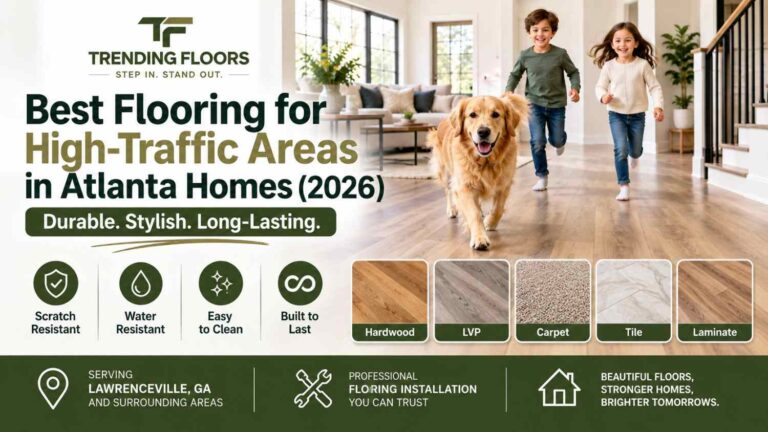
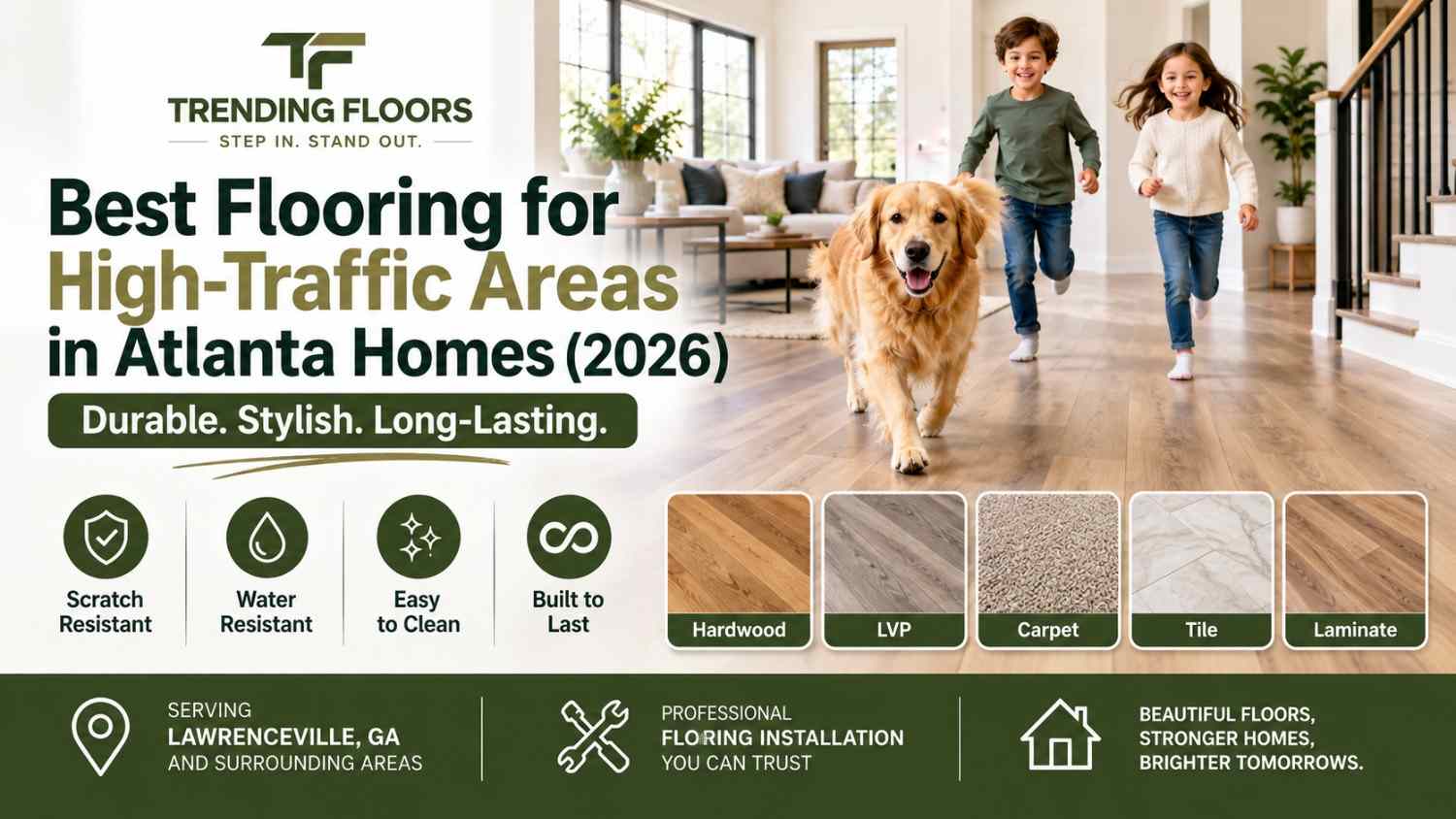
The front entry. The hallway. The kitchen. The family room. These are the rooms that take the most punishment in any Atlanta home — daily foot traffic, kids running in from outside, dogs, dropped items, dragged furniture, and Georgia’s notorious red clay tracked in from the yard. Choose the wrong flooring here and you’ll be replacing it in three to five years. Choose right and it holds up beautifully for twenty.
This guide covers the best flooring options for high-traffic areas in Metro Atlanta homes, with specific attention to what works on Georgia’s concrete slab foundations and in our humid climate — two factors that most national flooring guides ignore entirely.
What Makes a Floor “High-Traffic Ready”?
Not every durable-sounding floor is actually built for heavy daily use. When evaluating flooring for high-traffic areas, these are the factors that matter most:
- Wear layer thickness — for LVP, this is measured in mils. 12 mil handles moderate use; 20 mil and above is what you want in a true high-traffic zone.
- Hardness — for hardwood, the Janka hardness rating tells you how well a species resists denting. Soft woods scratch and dent quickly in busy households.
- Surface finish — matte and satin finishes hide scratches and scuffs far better than high-gloss, which shows every mark.
- Moisture resistance — entryways get wet from rain and shoes. Kitchens get spills. Any flooring in these zones needs to handle moisture without warping, swelling, or staining.
- Ease of cleaning — in high-traffic rooms, you’re cleaning constantly. Grout lines, embossed textures, and light colors all affect how much maintenance you’re signing up for.
- Slab compatibility — most Atlanta homes are built on concrete slab. High humidity in Georgia means concrete releases moisture vapor year-round. Whatever goes down needs to handle that.
Best Flooring Options for High-Traffic Areas in Atlanta
1. Luxury Vinyl Plank (LVP) — Best All-Around Choice
For the majority of Atlanta homeowners, premium LVP is the best flooring choice for high-traffic areas — and it isn’t a close contest. Here’s why it dominates:
- 100% waterproof — the core doesn’t absorb moisture, which matters enormously in entryways and kitchens and on Atlanta’s slab foundations
- Scratch and dent resistant — a 20 mil wear layer handles pet nails, dragged chairs, and dropped items without showing damage
- Dimensionally stable — quality SPC-core LVP doesn’t expand and contract with Georgia’s seasonal humidity the way wood products do
- Easy to clean — sweep and damp mop; no special products, no refinishing, no waxing
- Comfortable underfoot — modern thick-core LVP with attached underlayment is far softer than tile and significantly warmer
- Cost-effective — installed in Atlanta at roughly 4–9 per square foot
The one area where LVP falls short of hardwood is perceived prestige — in very high-end homes, sophisticated buyers or guests may notice. But for the vast majority of Atlanta households in the 300K–700K range, quality LVP in a realistic wood visual is indistinguishable from the real thing and outperforms it in every practical metric.
For maximum durability in entryways, hallways, and family rooms, look for SPC (stone plastic composite) core products at 6mm or thicker with a 20 mil wear layer. Our LVP flooring options include several collections purpose-built for heavy use.
2. Hybrid Rigid Core — Premium Durability with Enhanced Comfort
Hybrid rigid core flooring sits above standard LVP in the product hierarchy — combining the waterproof, dimensionally stable SPC core with additional comfort and acoustic layers that make it feel and sound noticeably better underfoot. For homeowners who want the maximum performance of LVP with a more premium feel, hybrid rigid core is the answer.
It handles everything LVP handles — moisture, slab installation, heavy traffic, scratch resistance — while reducing the hollow sound underfoot and providing better thermal comfort in rooms on slab. Installed cost runs slightly higher than standard LVP, but for open-plan family rooms and high-use hallways it’s worth the upgrade.
Explore our hybrid rigid core flooring options for high-traffic zones where comfort and durability both matter.
3. Porcelain Tile — Unmatched Durability, Best for Entryways and Kitchens
Nothing is harder or more durable than porcelain tile. It won’t scratch, won’t dent, won’t stain, and won’t be affected by moisture in any form. In a direct durability contest, tile beats every other flooring material by a wide margin.
The tradeoffs are real, though:
- Cold and hard underfoot — uncomfortable for long periods of standing or for bare feet in the morning
- Grout lines require maintenance — light-colored grout in a high-traffic zone is a constant cleaning challenge; darker grout or epoxy grout is a better choice
- Slippery when wet — important consideration for entryways where people come in from rain; choose a textured or matte-finish tile rated for wet areas
- Higher installation cost — typically 5–10 per square foot installed in Atlanta, more for large-format or complex patterns
Tile is the right answer for entryways with direct outdoor access, mudrooms, kitchens, and bathrooms — anywhere moisture is the primary concern and comfort is secondary. For family rooms and hallways where people spend more time on their feet, LVP or hybrid rigid core is more livable day-to-day.
See our tile flooring options for high-moisture entry and kitchen zones.
4. Engineered Hardwood — Premium Look with Better Traffic Performance Than Solid Wood
Engineered hardwood is the right choice when you want genuine wood character in high-traffic common areas but need better moisture and slab performance than solid hardwood provides. Its cross-ply construction resists the expansion and contraction that Georgia humidity causes in solid wood, making it stable in living rooms, dining rooms, and open-plan spaces.
For true high-traffic zones like entryways and mudrooms, engineered hardwood is not the first recommendation — it can scratch and dent, and it doesn’t love repeated exposure to wet shoes and tracked-in water. But for family rooms, dining rooms, and open-plan living areas that see constant foot traffic without the moisture exposure of an entryway, engineered hardwood delivers a premium look and feel that outlasts LVP on aesthetics while handling moderate daily traffic well.
Choose a species with a higher Janka rating — hickory, white oak, or hard maple — and a matte or satin finish that hides everyday scuffs. Installed cost in Atlanta: 6–11 per square foot.
View our engineered wood flooring options for living and dining areas.
5. What About Solid Hardwood in High-Traffic Zones?
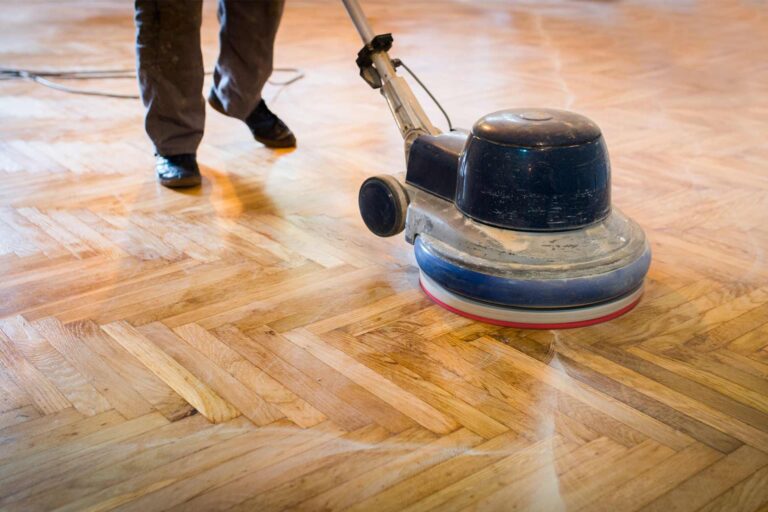
Solid hardwood in high-traffic areas is a mixed picture. On the positive side, solid hardwood can be sanded and refinished multiple times over its lifespan — so scratches and wear that would permanently damage LVP can be sanded away and the floor restored. A solid hardwood floor installed in a well-maintained Atlanta home can last 80–100 years.
The challenges: solid hardwood doesn’t belong in entryways or kitchens (moisture sensitivity), and it requires a wood subfloor or sleeper system on Atlanta slabs — it cannot be glued directly to concrete. In second-floor bedrooms and upper-level family rooms with wood subfloors, solid hardwood is an excellent long-term investment. On ground-floor slab areas that see heavy traffic and moisture exposure, engineered hardwood or LVP is the smarter choice.
Room-by-Room: Best Flooring for Each High-Traffic Zone
Front Entry / Foyer
Best choice: Porcelain tile or LVP (SPC core, 20 mil wear layer)
This is the hardest-working floor in the house — outdoor shoes, wet umbrellas, Georgia red clay, dog paws. Tile is the most durable and easiest to clean. LVP is warmer, quieter, and more comfortable if the entry flows into an open-plan space you want to feel consistent. Avoid hardwood here entirely — repeated moisture exposure from wet shoes shortens its life significantly.
Hallways
Best choice: LVP or engineered hardwood (consistent with adjacent rooms)
Hallways see concentrated foot traffic through a narrow space, which accelerates wear. The priority here is consistency with the rooms they connect — a hallway that breaks into a different material creates a choppy, disconnected feel. LVP or engineered hardwood that matches the main living area is the standard approach. Avoid carpet in hallways — it wears unevenly and shows traffic lanes within a few years.
Kitchen
Best choice: LVP (waterproof SPC core) or porcelain tile
Kitchens combine heavy foot traffic with spills, grease, and moisture. LVP handles all of it and is far more comfortable for standing than tile — important if you cook frequently. Tile is more durable but harder underfoot. Hardwood and engineered hardwood are generally not recommended for kitchens due to the moisture risk around sinks and dishwashers.
Family Room / Living Room
Best choice: LVP, hybrid rigid core, or engineered hardwood
The main gathering space in the home gets constant daily traffic but not the moisture exposure of entryways or kitchens. This is where aesthetics start to matter more — and where engineered hardwood makes a strong case alongside premium LVP. Hybrid rigid core is an excellent middle ground: the durability and waterproofing of LVP with enhanced acoustic and comfort properties suited to a room where people spend significant time.
Mudroom / Laundry Room
Best choice: Porcelain tile
Tile wins here without competition. Mudrooms and laundry rooms are wet, dirty, and heavily used. Tile handles everything — water, mud, cleaning products — and is the easiest to mop clean. Use larger format tiles (12×24 or larger) to minimize grout lines, and choose a darker grout to maintain appearance with minimal effort.
Atlanta-Specific Factors That Affect Your Decision
Concrete Slab Foundations
Most Metro Atlanta homes — including those in Lawrenceville, Alpharetta, Johns Creek, and Sandy Springs — are built on concrete slab. Slab foundations release moisture vapor year-round, which is amplified by Georgia’s humid summers. Any flooring installed on slab in high-traffic ground-floor areas must either be waterproof (LVP, tile) or installed with a proper moisture barrier (engineered hardwood). Our installation process includes slab moisture testing before any flooring goes down.
Georgia Red Clay
Atlanta’s distinctive red clay soil stains light-colored grout and light flooring finishes quickly. In entryways and mudrooms, choose darker grout if you go with tile, and mid-tone or natural wood visuals rather than very light gray or blonde finishes if you go with LVP. The difference in maintenance burden is significant.
Humidity and Seasonal Movement
Georgia summers are humid; winters are dry. This seasonal cycle causes wood products to expand and contract. Solid hardwood in large open-plan areas can develop gaps in winter and cupping in summer if not properly acclimated and installed. LVP and hybrid rigid core are dimensionally stable and unaffected by this cycle — a meaningful practical advantage in Atlanta’s climate.
Cost Comparison: High-Traffic Flooring in Atlanta
| Material | Installed Cost (Atlanta) | Durability | Moisture Resistance | Best Zones
|
|---|---|---|---|---|
| Premium LVP (SPC, 20mil) | 4–9/sq ft | Excellent | 100% waterproof | All high-traffic areas |
| Hybrid Rigid Core | 5–10/sq ft | Excellent | 100% waterproof | Family rooms, hallways |
| Porcelain Tile | 5–10/sq ft | Maximum | 100% waterproof | Entry, kitchen, mudroom |
| Engineered Hardwood | 6–11/sq ft | Good | Moisture-resistant | Living/dining rooms |
| Solid Hardwood | 9–17/sq ft | Good (refinishable) | Low | Upper floors, wood subfloor |
How Trending Floors Approaches High-Traffic Installations
Every high-traffic installation we do starts with a subfloor and moisture assessment. On Atlanta slabs, we test moisture vapor emission before recommending any product — because the right product installed over an untested slab is a warranty-voiding mistake that leads to bubbling, gapping, and flooring failure within a year or two.
We carry the full range of high-performance options — LVP, hybrid rigid core, porcelain tile, and engineered hardwood — and we’ll match you with the right product for each zone rather than selling you one solution for the whole house. We serve homeowners throughout Lawrenceville, Alpharetta, Johns Creek, Sandy Springs, Roswell, and Metro Atlanta.
Book a free in-home consultation → We’ll assess your subfloor, bring samples, and give you a written estimate before you commit to anything.
Frequently Asked Questions
What is the most durable flooring for high-traffic areas in an Atlanta home?
Porcelain tile is the most durable material available — nothing scratches, dents, or stains it. For a more comfortable and livable option that still handles heavy daily traffic, premium LVP with an SPC core and a 20 mil wear layer is the best all-around choice for most Atlanta households. It’s 100% waterproof, scratch-resistant, and handles Georgia’s slab construction and humidity exceptionally well.
Is LVP good for high-traffic areas?
Yes — premium SPC-core LVP with a 20 mil or higher wear layer is one of the best high-traffic flooring choices available. It handles heavy foot traffic, pet nails, dropped items, and moisture without showing damage, and it’s significantly more comfortable than tile. Look for products 6mm or thicker with an attached underlayment for the best performance.
Can I put hardwood flooring in a high-traffic entryway in Atlanta?
It’s not recommended. Entryways in Atlanta homes are exposed to wet shoes, rain, and Georgia red clay — repeated moisture exposure shortens hardwood’s life significantly in this zone. Tile or waterproof LVP is the right choice for entry areas. Hardwood performs well in living rooms and dining rooms where moisture exposure is controlled.
What flooring holds up best with dogs in Atlanta homes?
Premium LVP (SPC core, 20 mil wear layer) is the top choice for homes with dogs. It’s fully waterproof — accidents clean up completely — and resistant to scratching from dog nails. Porcelain tile is equally pet-proof but harder and colder underfoot. Hardwood and engineered hardwood show scratches from dog nails over time and are not recommended in pet-heavy zones.
Does flooring in high-traffic areas need special installation on Atlanta slabs?
Yes. Atlanta concrete slabs release moisture vapor year-round due to Georgia’s humidity. Before installing any flooring on slab — especially in high-traffic ground-floor areas — moisture vapor emission should be tested. LVP and tile are naturally waterproof and handle slab moisture well. Engineered hardwood requires a moisture barrier. We test every slab before installation to ensure the right product goes down correctly.
How long does high-traffic flooring last in an Atlanta home?
Premium LVP installed correctly on an Atlanta slab typically lasts 20–25 years in high-traffic conditions. Porcelain tile can last indefinitely with proper grout maintenance. Engineered hardwood lasts 20–30 years with normal care. The biggest factor in longevity isn’t the product — it’s correct installation, especially slab moisture management, and appropriate product selection for each room’s specific use.