
It is one of the first questions every Atlanta homeowner asks when they start planning a flooring project — and one of the questions that gets the most frustratingly vague answers. “It depends” is technically accurate but practically useless when you’re trying to decide whether to take a week off work, arrange for your kids to stay with family, or figure out what to do with your three dogs for the duration of the project.
This guide gives Atlanta homeowners the specific, honest timelines they need — broken down by material type and room, with the Georgia-specific factors that affect every installation timeline in the Metro Atlanta market. The timeline for flooring installation in a humid Georgia home with a concrete slab subfloor is meaningfully different from national averages that don’t account for local conditions. Here is what to actually expect.
The Five Factors That Control Every Atlanta Flooring Timeline
Before getting into specific material timelines, it helps to understand the variables that compress or extend every project. These five factors determine whether your installation runs one day or five — and two of them are specific to Georgia’s market.
Factor 1 — Material Type
This is the most significant timeline driver. LVP clicks together quickly and requires no cure time. Tile requires adhesive set time between installation and grouting, then grout cure time before foot traffic. Hardwood requires acclimation before installation and finish dry time after. Each material has its own minimum timeline that professional installation simply cannot compress below without compromising quality.
Factor 2 — Subfloor Condition (Georgia-Specific)
Atlanta’s concrete slab foundations introduce timeline variables that wood-subfloor markets don’t face. Moisture testing — the non-negotiable first step in any Metro Atlanta flooring installation — takes 24–72 hours to complete accurately using RH in-situ probe testing. If moisture levels are elevated (common in Gwinnett County homes near Chattahoochee tributaries and in Fulton County properties near natural drainage areas), moisture mitigation treatments require additional curing time before installation can begin. Subfloor leveling with self-leveling compound requires a minimum 24-hour cure before flooring goes down.
A Lawrenceville or Johns Creek slab home that needs moisture testing, mitigation, and leveling can add two to three days to any installation timeline before a single plank is laid. This is not a problem with the installer — it is the reality of professional installation in Georgia’s climate, and any contractor who skips these steps to shorten the timeline is creating future failure, not saving you time.
Factor 3 — Square Footage and Layout Complexity
A single bedroom runs faster than an open-plan main floor — obvious enough. Less obvious is the impact of layout complexity. Long diagonal installations, herringbone patterns, multiple transitions between rooms and materials, irregular room shapes, and significant stair work all add meaningful time beyond what simple square footage math would suggest. In Atlanta’s established neighborhoods where older home layouts are more complex, this factor can add a full day to projects that look straightforward on paper.
Factor 4 — Georgia’s Humidity and Acclimation
According to the National Wood Flooring Association, hardwood flooring must acclimate to the installation environment — reaching equilibrium with the home’s temperature and humidity — before installation begins. In Metro Atlanta’s humid subtropical climate, with average relative humidity of approximately 69% and summer peaks regularly exceeding 75%, acclimation periods for hardwood and engineered hardwood are on the longer end of the manufacturer’s recommended range. Most Atlanta installers allow 48–72 hours of acclimation for engineered hardwood and 5–7 days for solid hardwood during the summer months — significantly longer than the 24–48 hours that drier markets might use.
Georgia’s summer heat also affects adhesive cure times in glue-down installations. Elevated temperatures accelerate adhesive working time — meaning installers have less open time to position planks before adhesive sets. Professional installers account for this by adjusting adhesive selection and application method for summer projects. This is another reason local contractor experience in Georgia’s specific climate matters more than it might in a more forgiving market.
Factor 5 — Old Floor Removal
Removing existing flooring is consistently underestimated in timeline planning. Carpet pulls out quickly — a full main floor can often be cleared in two to three hours. Glue-down hardwood or tile is significantly more labor-intensive: old tile removal with a floor scraper, adhesive residue removal from the concrete, and debris hauling can add a full day to a project before new installation begins. Old sheet vinyl with multiple adhesive layers over concrete — common in Atlanta’s 1970s and 1980s housing stock — is particularly time-consuming and may require professional assessment for potential asbestos content before removal.
Room-by-Room Timeline: LVP Flooring in Atlanta
LVP is the fastest professional flooring installation available — a significant practical advantage for Atlanta households that want to minimize disruption. Here are realistic timelines for LVP flooring installation across different room types and project scales in Metro Atlanta homes.
Single Bedroom (150–200 sq ft)
Timeline: 3–5 hours
A standard bedroom with straightforward layout is a half-day project for a two-person professional crew. This includes old carpet removal (if applicable), subfloor preparation, installation, and transition strip fitting. Furniture moving adds 30–60 minutes. The room is usable the same evening.
Kitchen (150–250 sq ft)
Timeline: 4–7 hours
Kitchen LVP installation takes longer than bedrooms due to layout complexity — appliance areas, island cutouts, multiple transition strips, and the need for precise cuts at cabinetry. Add time for appliance disconnection and movement if the installer handles this. Most Atlanta kitchen LVP installations are completed in one day.
Main Floor Open Plan (1,000–1,500 sq ft)
Timeline: 1–2 days
A full main-floor LVP installation — living room, dining room, kitchen, hallways, and entryway as a continuous installation — takes one full day for a two-person crew in most Atlanta homes. Homes with more complex layouts, multiple level changes, or significant stair work extend to two days. The main floor is typically accessible the following morning.
Whole-Home LVP (2,000–3,000 sq ft)
Timeline: 2–4 days
Full-home LVP projects in larger Gwinnett County and North Fulton County homes — covering main floor, upstairs hallways, and multiple bedrooms — typically run two to three days for well-organized professional crews. Homes with stairs, basement areas, and complex layouts run three to four days. These projects are almost always completed without requiring the family to vacate, though specific rooms are unavailable during their installation day.
Room-by-Room Timeline: Hardwood and Engineered Hardwood in Atlanta
Hardwood timelines are longer than LVP due to mandatory acclimation periods and — for site-finished solid hardwood — multiple finish coats that require dry time between applications. Engineered hardwood is faster than solid hardwood because it typically arrives pre-finished from the manufacturer.
Engineered Hardwood — Single Room (200–300 sq ft)
Timeline: 1–2 days (including acclimation)
Engineered hardwood requires 48–72 hours of acclimation in the installation space before installation begins. The installation itself for a single room takes 4–6 hours for a professional crew. Total elapsed time from material delivery to completed installation: two to three days. The room is usable immediately after installation.
Engineered Hardwood — Main Floor (1,000–1,500 sq ft)
Timeline: 3–5 days total (including acclimation)
Account for 48–72 hours of acclimation, then one to two days of installation for a two-person professional crew on a full main floor. In Atlanta’s summer humidity, allow the longer end of the acclimation range. The floor is immediately usable after installation with no cure time required (pre-finished product).
Solid Hardwood — Main Floor (1,000–1,500 sq ft) — Site-Finished
Timeline: 7–10 days total
Solid hardwood is the longest flooring installation timeline in residential use. Allow 5–7 days for acclimation in Atlanta’s summer humidity, one to two days for nail-down installation, and three to four days for sanding, staining (if desired), and three finish coats with appropriate dry time between each. The Atlanta home must be vacated during oil-based finish application due to fumes. Light foot traffic is possible 24 hours after the final coat; furniture return after 48–72 hours; area rugs after 30 days full cure.
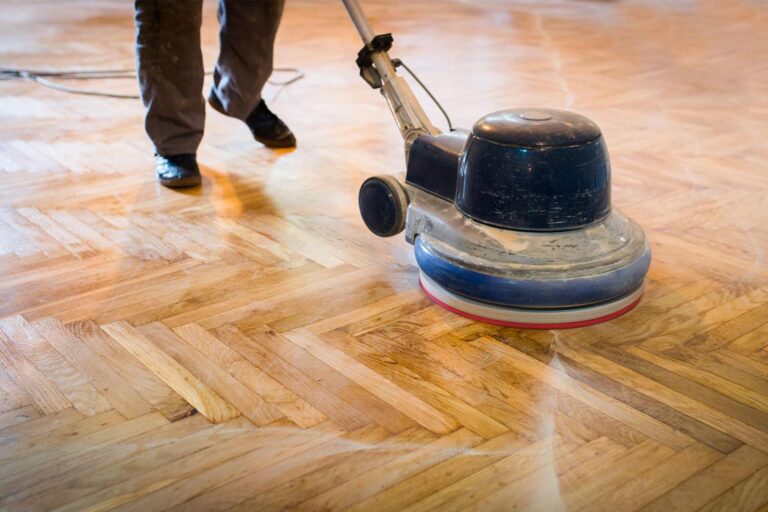
For Atlanta homeowners with existing hardwood that needs restoration rather than replacement, hardwood floor refinishing runs two to five days — significantly faster than new installation and a fraction of the cost.
Room-by-Room Timeline: Tile Flooring in Atlanta
Tile installation has the most non-negotiable minimum timelines of any flooring material — the adhesive and grout chemistry requires specific cure periods that simply cannot be shortened without compromising the installation’s long-term integrity. Porcelain tile flooring timelines in Atlanta homes:
Single Bathroom (50–100 sq ft)
Timeline: 2–3 days
Day one: surface preparation, adhesive application, tile setting, and initial layout. Day two: grouting after adhesive cure. Day three: grout sealing and final cleanup. The bathroom is not usable during installation and requires 24 hours after grouting before light use. For master bathrooms with custom tile patterns, shower surrounds, or heated floor systems, add one to two additional days.
Kitchen Floor (150–250 sq ft)
Timeline: 3–4 days
Large-format porcelain (24″x24″ and above) — the dominant specification in Atlanta kitchens in 2026 — takes longer to set and level than smaller tiles due to the precision required for lippage-free installation. Allow three days minimum: adhesive and tile setting, grout, and seal. The kitchen should not be walked on for 24 hours after grouting.
Full Main Floor Tile (1,000+ sq ft)
Timeline: 5–8 days
Large-scale tile projects across open-plan main floors are week-long projects. Installation proceeds in sections to allow adhesive cure before the next section begins. These projects almost always require the family to manage without the main living area for several days — planning around this disruption is essential for Atlanta households with children and pets.
Room-by-Room Timeline: Carpet Installation in Atlanta
Carpet is the fastest flooring installation available in most residential applications — a significant advantage for Atlanta homeowners who need minimal disruption.
Single Bedroom (150–200 sq ft)
Timeline: 2–4 hours
A standard bedroom carpet installation — tack strips, padding, carpet cutting, power stretching, and trimming — is typically completed in two to four hours by a professional crew. The room is usable the same day.
Full Upper Floor (600–900 sq ft — 3 bedrooms, hallway, stairs)
Timeline: 1 full day
A complete upper-floor carpet installation in a typical Atlanta suburban home is a one-day project. Stairs add time — professional stair carpet installation takes approximately 30–45 minutes per stair including trimming and securing — but a full upper floor with 14–16 stairs is typically completed within a standard work day.
Full Home Carpet (1,500+ sq ft)
Timeline: 1–2 days
Whole-home carpet projects in larger Gwinnett County or North Fulton County homes typically run one to two days. Furniture moving, old carpet removal, subfloor preparation, and installation of multiple rooms across multiple floors is efficiently managed by a professional crew within two days in most cases.
How Atlanta’s Seasons Affect Your Installation Timeline
Georgia’s climate creates seasonal planning considerations that most flooring guides — written for national audiences — don’t address.
Summer (June–September) — Plan for Longer Acclimation
Atlanta’s peak humidity months extend hardwood acclimation periods and affect adhesive working times in glue-down installations. If your project involves solid or engineered hardwood, plan for the longer end of acclimation ranges (5–7 days for solid hardwood, 48–72 hours for engineered). Schedule projects far enough in advance that acclimation isn’t rushed. HVAC systems should be operational and set to normal living conditions during acclimation — not turned off to save energy while the house is under construction.
Winter (December–February) — Watch for Dry Conditions
Atlanta winters are mild but drier than summer — indoor humidity can drop significantly if HVAC heating systems are running without humidification. Solid hardwood installed during dry winter conditions will acclimate to a different moisture content than it will see in summer, which can lead to minor gapping between boards as summer humidity arrives. Professional installers account for seasonal conditions in their installation specifications — this is another reason contractor experience in Georgia’s specific climate matters.
Spring and Fall — Optimal Installation Windows
March–May and September–November are Atlanta’s most favorable installation windows for hardwood flooring. Moderate temperatures and humidity levels that approach annual averages mean acclimation is more predictable, adhesive working times are optimal, and the installed floor is less likely to experience dramatic seasonal movement in the months immediately following installation.
Practical Planning Guide for Atlanta Homeowners
Armed with realistic timelines, here is how to plan your Atlanta flooring project to minimize disruption and avoid the scheduling surprises that frustrate most homeowners.
Book Installation Windows, Not Days
The most common planning mistake is assuming installation will take exactly the quoted number of days and scheduling around that assumption. Build a buffer: if your contractor estimates three days, plan for four. Subfloor surprises — unexpected moisture readings, leveling needs, old adhesive removal — are common in Atlanta’s slab-heavy market and can add a day to any project. A contractor who discovers elevated moisture and proceeds anyway to stay on schedule is not doing you a favor.
Plan Pet and Child Logistics Early
Children should not be present in rooms being actively installed — particularly during tile work (sharp cuts, adhesive) and hardwood refinishing (fumes, sanding dust). Dogs specifically pose a challenge: paw prints in uncured adhesive are one of the more expensive mid-project surprises in Atlanta flooring installations. Arrange pet logistics — boarding, a family member’s home, or yard containment — before the project begins, not the morning of.
Stage Furniture Removal in Advance
Professional crews typically move furniture as part of the project — but coordinating where it goes, especially in a whole-home project, adds time to each room’s start. Having furniture staged in designated holding areas (garage, a cleared room, rented pod storage) before the crew arrives lets installation start without the furniture-logistics delay that adds a half-day to many Atlanta projects.
Schedule Post-Installation Cure Time
Build cure time into your planning — not just installation time. Tile grout requires 24 hours before foot traffic and 72 hours before wet mopping. Oil-based hardwood finish requires 24 hours before light foot traffic and 30 days before area rugs. LVP and engineered hardwood require no significant cure time, but adhesive used in glue-down applications requires 24 hours before heavy furniture return. Factor these windows into your return-to-normal-life timeline, especially for kitchen and bathroom projects where the room is not usable during cure.
Trending Floors provides detailed project-by-project timelines as part of every free estimate — including room-by-room schedules, furniture logistics guidance, and realistic cure time planning for every material type. Our professional flooring installation services across Metro Atlanta are designed to minimize household disruption while never compromising the steps that protect your investment.
Frequently Asked Questions — Flooring Installation Timelines in Atlanta
For additional questions about flooring materials, costs, and preparation, visit our Atlanta flooring FAQ – covering the most common questions from Metro Atlanta homeowners.
How long does flooring installation take in an Atlanta home?
It depends on the material and project scope. LVP installation takes one to two days for a full main floor. Engineered hardwood takes three to five days including acclimation. Solid hardwood takes seven to ten days including acclimation and finish coats. Tile takes three to eight days depending on square footage and pattern complexity. Carpet is the fastest — a full upper floor with bedrooms and stairs is typically completed in one day. Georgia-specific factors including moisture testing and humidity-extended acclimation periods can add one to three days to any timeline.
Why does flooring installation take longer in Atlanta than national guides suggest?
Two Georgia-specific factors extend Atlanta timelines beyond national averages. First, concrete slab moisture testing — required in most Metro Atlanta homes — takes 24–72 hours to complete accurately and may require additional time for moisture mitigation treatment if levels are elevated. Second, Georgia’s humidity extends hardwood acclimation periods: solid hardwood requires 5–7 days of acclimation in Atlanta’s summer conditions versus 24–48 hours in drier markets. Skipping these steps produces shorter timelines that lead to floor failures — which is why professional Atlanta installers build them in.
How long does LVP installation take in Atlanta?
LVP installation is the fastest option for Atlanta homeowners. A single bedroom takes three to five hours. A full main-floor installation (1,000–1,500 sq ft) takes one to two days. A whole-home installation covering 2,000–3,000 square feet typically takes two to four days. LVP requires no cure time after installation — rooms are usable the same day the installation is complete. Add one day if significant subfloor leveling is required.
How long does tile installation take in Atlanta?
Tile has the most non-negotiable minimum timeline of any flooring material. A single bathroom takes two to three days minimum — one day for setting tile, one day for grouting after adhesive cure, and time for sealing. A kitchen floor runs three to four days. Large-scale main-floor tile installations take five to eight days. These timelines cannot be significantly shortened — the adhesive and grout chemistry requires specific cure periods regardless of how quickly the tile is placed.
Do I need to leave my home during flooring installation?
For most LVP, engineered hardwood, and carpet installations — no. Professional crews work room by room and most Atlanta families manage comfortably at home during these projects with some flexibility around the active work areas. For site-finished solid hardwood — where oil-based finish produces strong fumes during application — vacating the home for 24–48 hours per finish coat is strongly recommended. Tile work is manageable without vacating but requires keeping children and pets away from active work areas.
What is the fastest flooring option for Atlanta homeowners who need minimal disruption?
Carpet is the fastest installation for bedrooms and upstairs areas — a full upper floor is typically completed in one day. For main-floor hard surface flooring, LVP is the fastest option — a full main floor is typically installed in one to two days with no cure time required before normal use. The combination of LVP on the main floor and carpet upstairs represents the fastest full-home flooring renovation timeline available in Metro Atlanta’s market.
How far in advance should I book flooring installation in Atlanta?
For non-urgent projects, booking three to six weeks in advance gives you access to your preferred contractor’s schedule and adequate time to order materials that may require production lead time. Spring (March–May) is the busiest season for Atlanta flooring contractors — booking further in advance during this period is advisable. For urgent projects, some contractors can accommodate two to three week lead times for in-stock materials, but schedule availability varies significantly by contractor and season.
Ready to Plan Your Atlanta Flooring Project?
Trending Floors provides free in-home consultations across Metro Atlanta — including a detailed room-by-room installation timeline, furniture logistics planning, and a written estimate covering every cost component clearly. We install LVP, engineered hardwood, hardwood, tile, and carpet across Lawrenceville, Alpharetta, Johns Creek, Sandy Springs, Roswell, and the broader Metro Atlanta area — all with our own trained crews and written workmanship warranties.
Book your free flooring consultation in Atlanta today and get a realistic project timeline specific to your home, your material choice, and your household’s schedule.
About Trending Floors
Trending Floors is a licensed and insured flooring contractor based at 465 Maltbie Street, Suite 240, Lawrenceville, GA 30046, serving Metro Atlanta homeowners since 2018. We install LVP, engineered hardwood, hardwood, tile, carpet, and epoxy flooring — all with our own trained crews, written estimates, and workmanship warranties on every project.
(404) 944-2548 | estimates@trendingfloors.com | Mon–Sat 8am–6pm