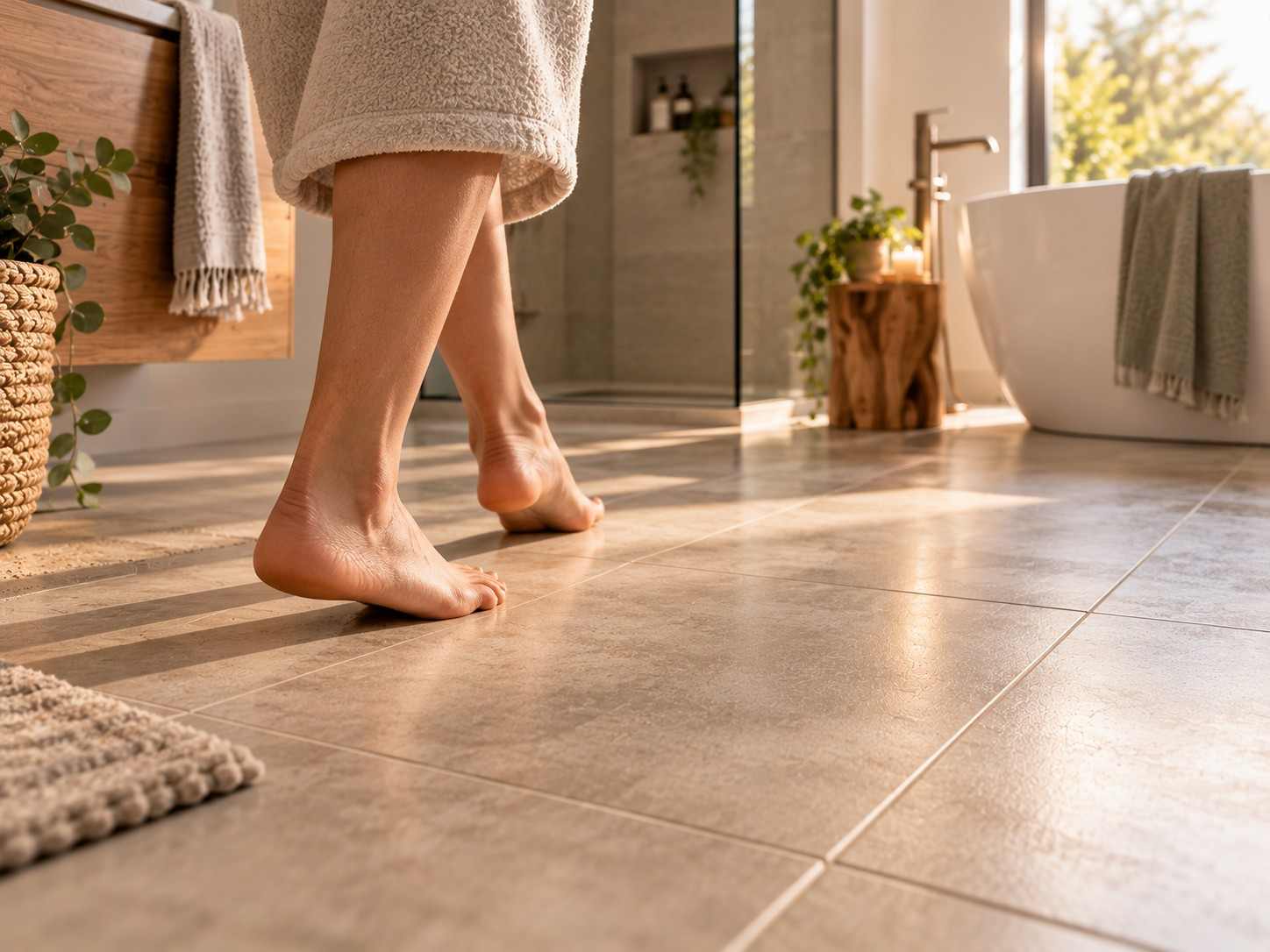
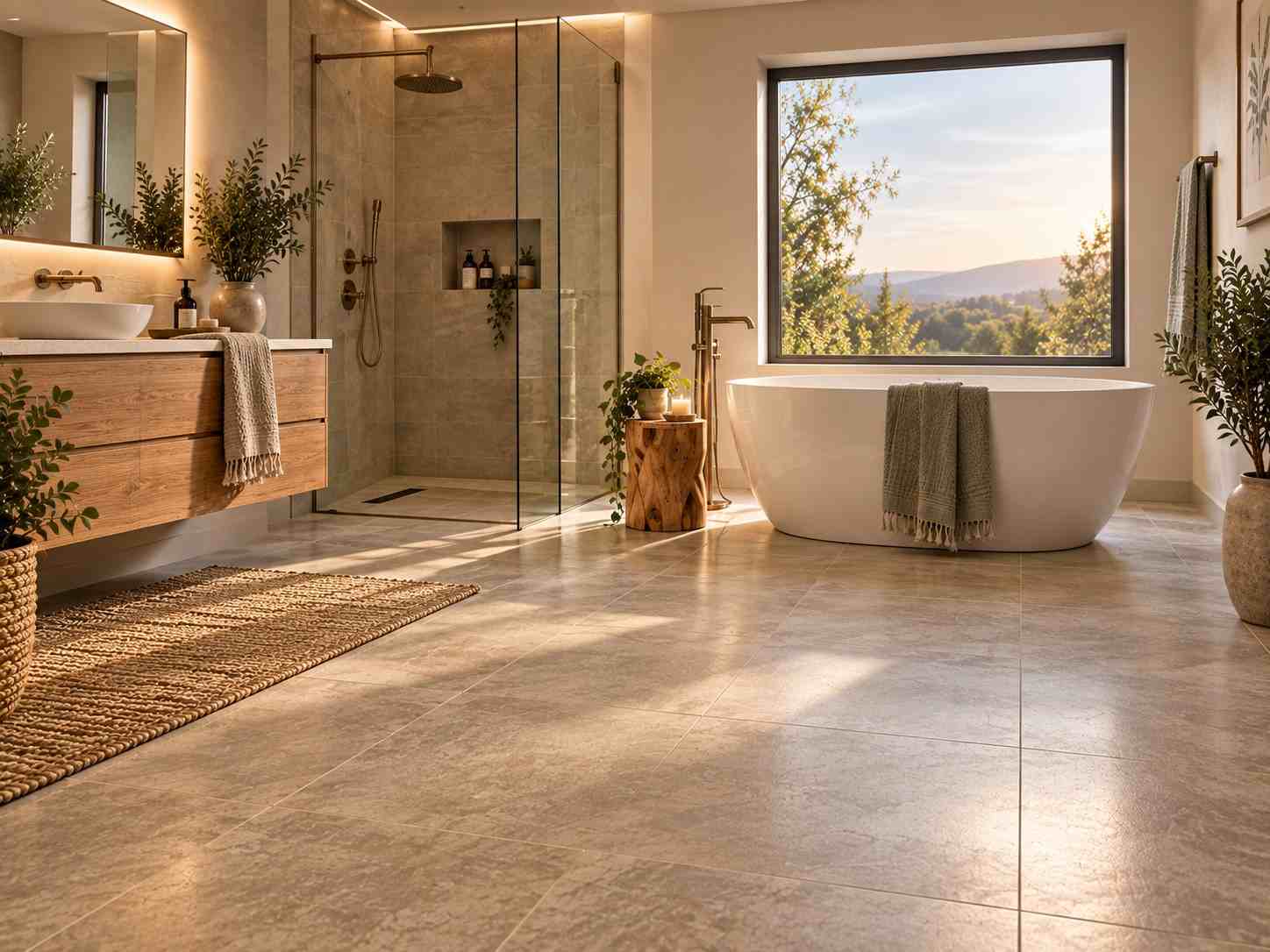
We install radiant heated flooring systems for bathrooms across Metro Atlanta, giving you warm floors underfoot no matter the season. Heated flooring pairs seamlessly with tile, stone, or LVP, adding comfort and value to any bathroom renovation.
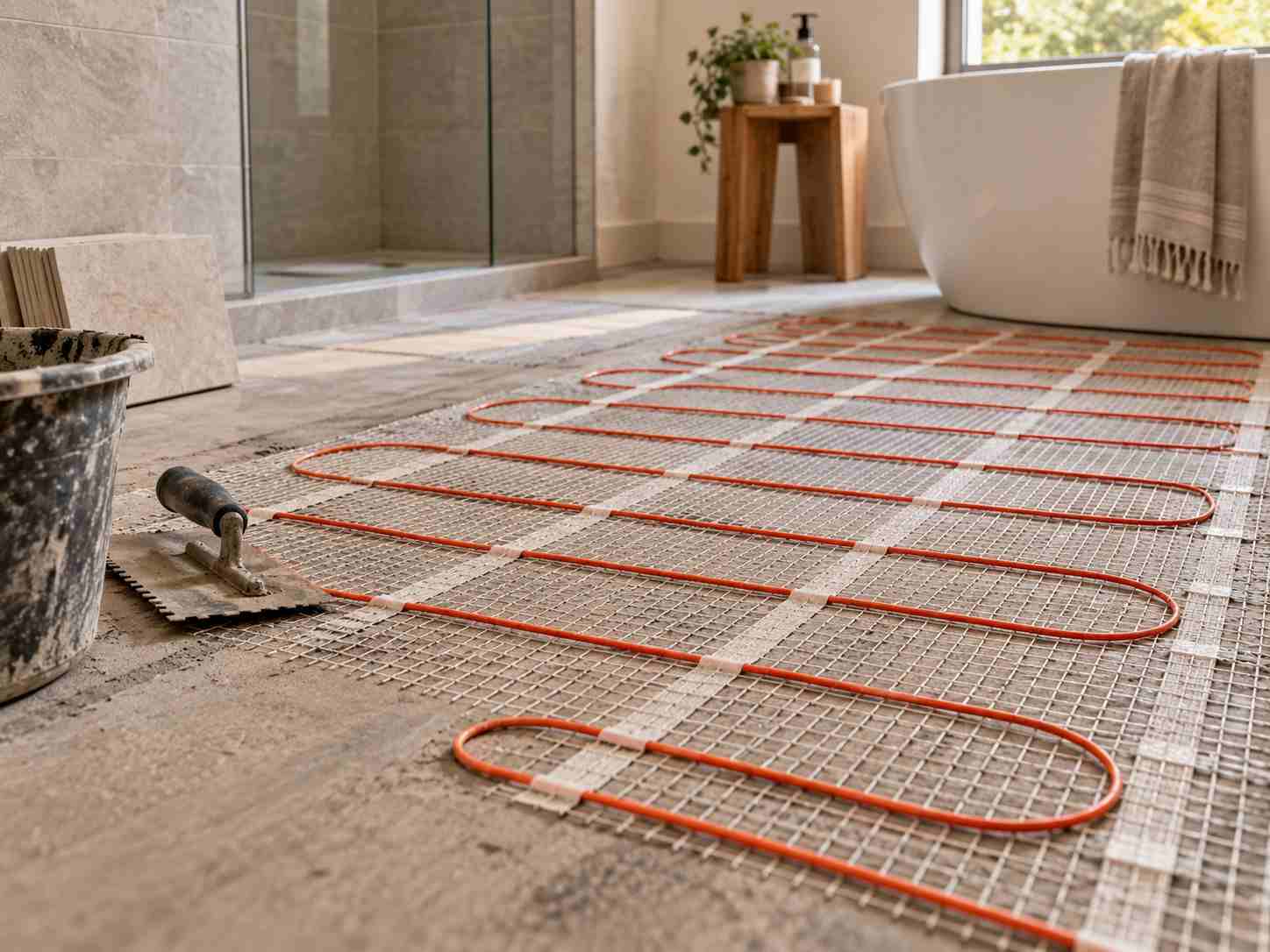
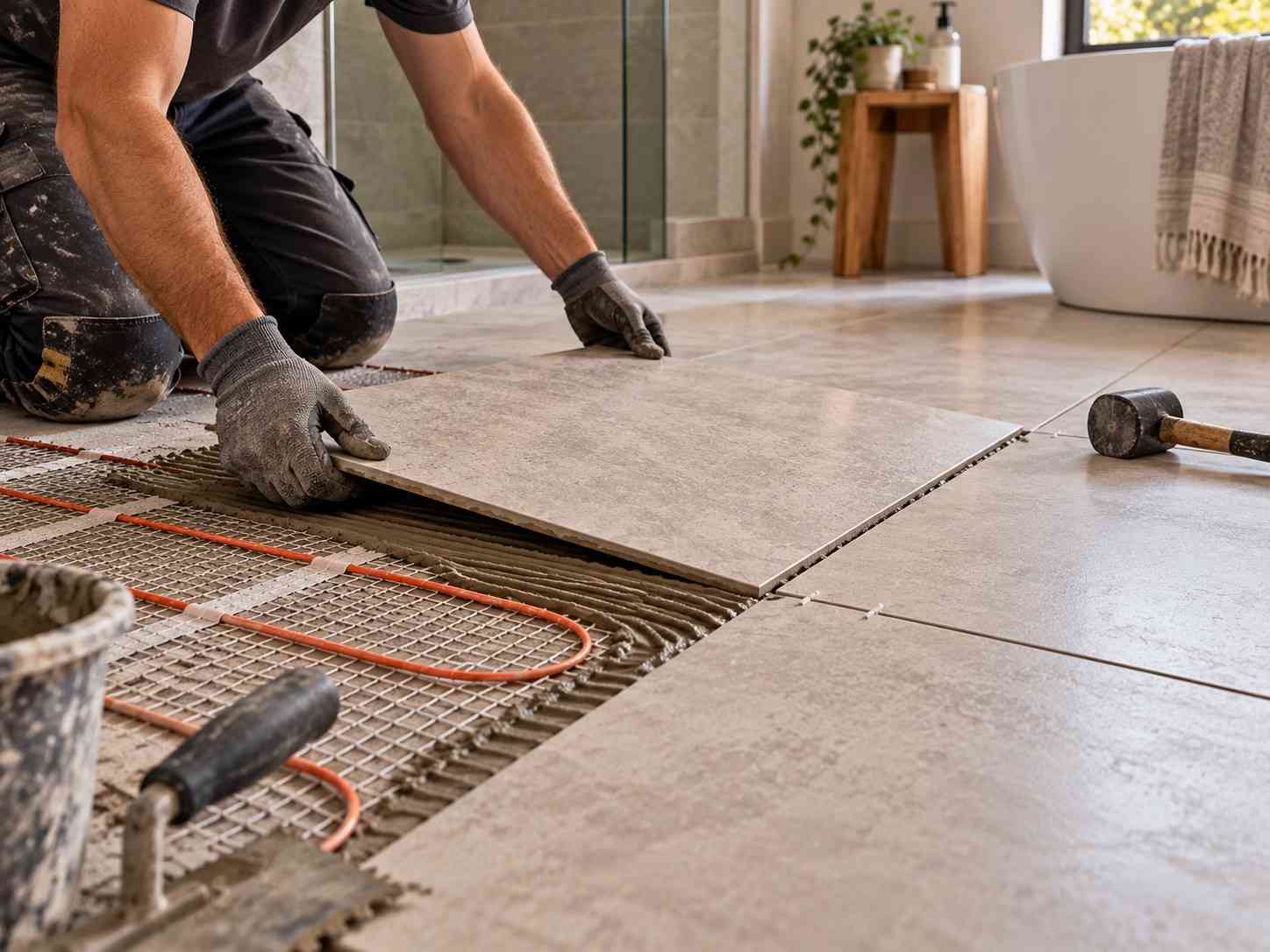
We install electric radiant heating systems beneath your bathroom floor, providing even, consistent warmth. Our team handles subfloor prep, heating mat or cable placement, and thermostat wiring so the system performs reliably for years.
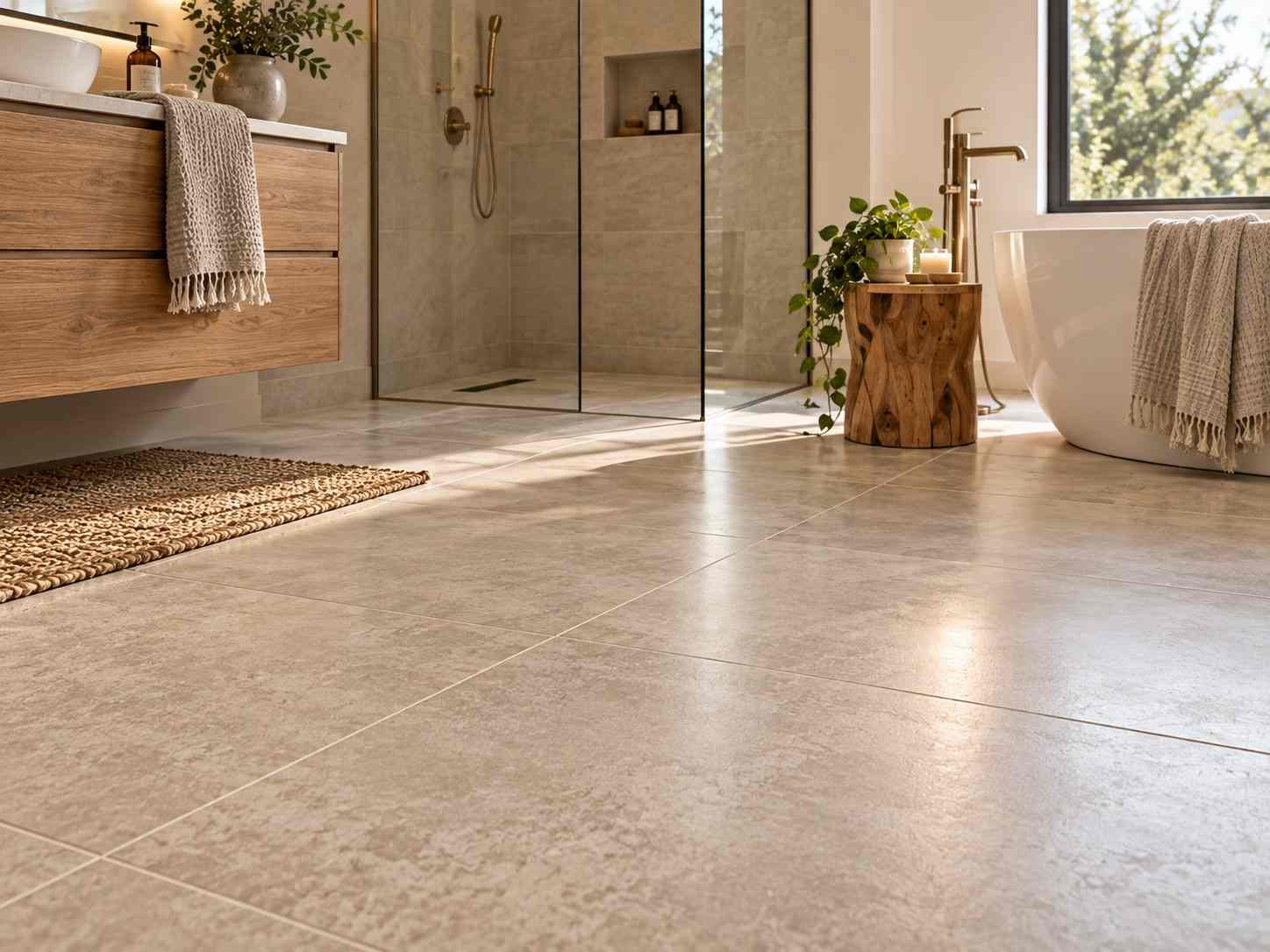
Whether you’re installing tile, stone, or luxury vinyl, our Atlanta team ensures your chosen flooring is fully compatible with radiant heat, so you get both the look you want and consistent warmth underfoot.
Our installers place and test every heating element before flooring goes down, checking for even heat distribution and proper thermostat function — so you’re not left with cold spots or callbacks.
Adds comfort and value to any bathroom, especially in colder months.
Book a free estimate and find out how heated flooring can transform your bathroom’s comfort.
Please reach us at trendingfloorsllc@gmail.com if you cannot find an answer to your question.
Heated bathroom flooring uses a radiant heat system installed beneath the finished floor. Most residential systems use thin electric heating cables or mats laid across the subfloor, which are then covered by tile, stone, or another flooring material. A thermostat controls the system, warming the floor surface evenly from below rather than heating the air in the room.

Tile, stone, and LVP are common compatible options. Tile and stone conduct heat especially well, making them the most popular choice for radiant systems, while LVP can also be used with the right underlayment and system type.
A heated floor installation as part of a bathroom renovation typically adds one to two days to the project timeline, on top of however long the flooring installation itself takes, since the heating system needs to be tested before flooring goes down over it.
Electric radiant floor heating in a single bathroom is generally a modest addition to a home’s energy use, since it’s typically run on a timer or thermostat for limited hours rather than continuously, and only heats one room. Actual impact depends on system size, usage habits, and local electricity rates.