Here’s a full blog post that covers everything about residential and commercial epoxy flooring, including benefits, types, applications, costs, maintenance, and frequently asked questions. You can copy, customize, or publish it on your website or blog as needed.
Everything You Need to Know About Residential and Commercial Epoxy Flooring
Epoxy flooring has become one of the most popular solutions for residential and commercial spaces alike—and for good reason. Whether you’re upgrading your garage, finishing your basement, or resurfacing a retail store or warehouse, epoxy offers a durable, stylish, and long-lasting flooring option.
In this blog, we’ll break down everything you need to know about epoxy flooring so you can decide if it’s right for your next project.
What Is Epoxy Flooring?
Epoxy flooring is a type of surface coating made from a mixture of resin and hardeners. When combined, they create a rigid, plastic-like material that bonds strongly to concrete. This flooring system is known for its strength, resistance to wear, and glossy finish.
Benefits of Epoxy Flooring
1. Durability
Epoxy floors are extremely tough. They can withstand heavy traffic, dropped tools, and even chemical spills, making them ideal for garages, warehouses, and commercial spaces.
2. Easy to Clean
The seamless surface of epoxy makes it easy to sweep, mop, or pressure wash. Dirt, oils, and debris stay on the surface without seeping in.
3. Moisture & Chemical Resistance
Epoxy is waterproof and resistant to most industrial chemicals, which helps protect your concrete slab underneath.
4. Customizable Appearance
Epoxy coatings come in a variety of colors and styles—solids, metallics, flake systems, and quartz—to create anything from a high-gloss showroom finish to a subtle matte garage floor.
5. Cost-Effective Over Time
While the upfront cost may be higher than standard concrete sealers or tiles, epoxy’s lifespan and low maintenance needs make it a great long-term investment.
Types of Epoxy Flooring
1. Solid Color Epoxy
Simple and sleek—perfect for modern garages, kitchens, and showrooms.
2. Flake Epoxy (Decorative Chip System)
Includes colored flakes for texture and slip resistance. Common in garages, locker rooms, and retail spaces.
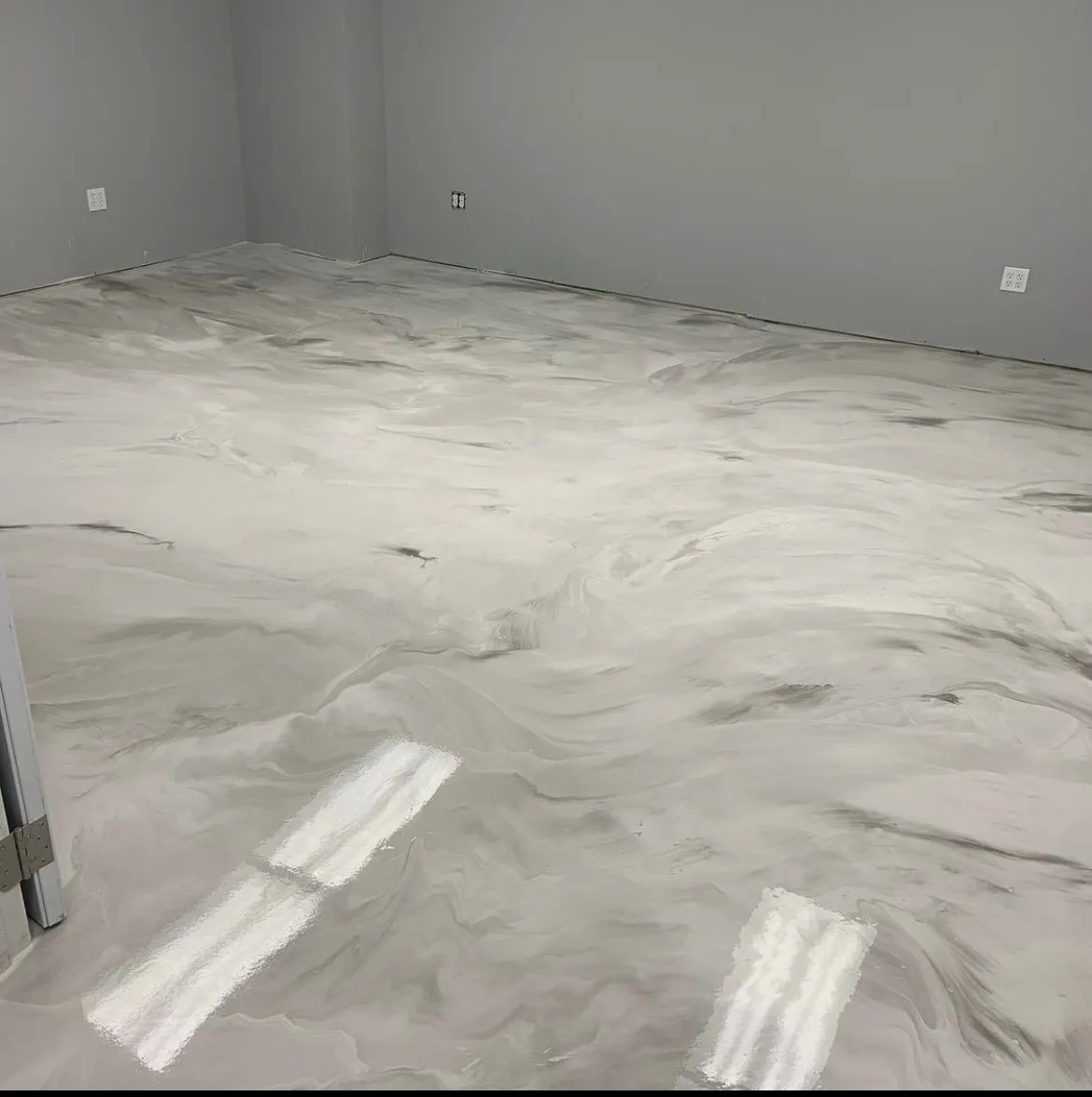
3. Metallic Epoxy
Creates a 3D, marbled effect with rich swirls and depth—ideal for showrooms, salons, basements, or luxury homes.
4. Quartz Epoxy
Includes quartz granules for added durability and slip resistance—commonly used in commercial kitchens or medical environments.
5. Anti-Static & Industrial Grade Epoxy
Used in data centers, labs, and factories where electrostatic discharge can be an issue.
Residential vs. Commercial Applications
Residential
• Garages
• Basements
• Laundry rooms
• Kitchens
• Patios
Key Features: Aesthetic appeal, comfort underfoot, easy maintenance, customization.
Commercial
• Warehouses
• Auto shops
• Retail stores
• Restaurants
• Hospitals
• Salons and spas
Key Features: Durability, heavy load resistance, OSHA-compliant slip resistance, and hygiene.
Installation Process
1. Surface Preparation – Grinding or shot blasting the concrete for a clean, rough surface.
2. Repairs & Cleaning – Filling cracks and cleaning thoroughly.
3. Primer Application – Helps the epoxy bond with the concrete.
4. Epoxy Application – Applying base coat, optional flake or quartz, and a clear topcoat.
5. Curing Time – 24 to 72 hours before heavy use.
Cost of Epoxy Flooring
Pricing depends on the type of epoxy, surface prep, and square footage:
Application Type
Average Cost (per sq ft)
Basic Solid Color
$4 – $6
Flake System
$5 – $8
Metallic Epoxy
$8 – $12+
Quartz or Industrial
$7 – $10+
Commercial installations may vary based on scale, access, and required compliance.
Maintenance Tips
• Sweep and mop regularly to prevent dirt build-up.
• Clean spills promptly—especially oils and chemicals.
• Avoid dragging heavy equipment across the surface.
• Reapply topcoat every 5–7 years for longevity.
Common FAQs
Q: Is epoxy flooring slippery?
A: It can be when wet, but additives like flakes, quartz, or anti-slip grit can be added to increase traction.
Q: How long does epoxy flooring last?
A: 10–20 years with proper care in residential settings; 5–10 years in heavy-duty commercial use.
Q: Can epoxy be applied over old concrete?
A: Yes, as long as the surface is properly cleaned, prepped, and free from moisture issues.
Q: Can I DIY epoxy my floor?
A: DIY kits exist, but professional installation is recommended for long-lasting results and warranty protection.
Is Epoxy Right for You?
Epoxy flooring combines function and beauty, making it a strong candidate for a wide range of projects. Whether you’re upgrading your garage or enhancing the performance of your business space, epoxy offers a sleek and dependable solution.
Want a free quote or professional advice on your epoxy flooring project? Contact our team at Trending Floors—we specialize in custom epoxy systems for residential and commercial clients across Georgia.